
2026 Irene Adler Prize
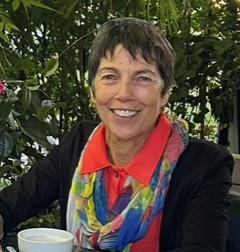 Doley Henderson is the winner of the 2026 Irene Adler Prize for women writers for her story, “Oyibo.” It appears below.
The Toronto-based Henderson, who receives $1,000 toward her education, is seeking her M.Sc. in creative writing for therapeutic purposes at Metanoia Institute through Middlesex University.
An honorable mention goes to:
Anne Marie Wells (“Halfway”), who is pursuing her creative writing undergraduate degree at Okanagan College in Kelowna, British Columbia.
This is the first all-Canadian group of winners in competition history.
Oyibo
By Doley Henderson
“Ekaro, Oyibo,” says Lola in Yoruba. Good morning, white woman.
“Ekaro,” I reply. Then we both laugh. Her laugh is bubbly and musical. Mine is hoarse.
Lola sways to the juju music in her head as her mini-skirt flip-flaps and her platform heels click-clack on the tile floor. She flicks her hand to show how hot it is. Temilola is her first name followed by several others – Lola for short.
We skip together down the hallway. Her flashing smile eases my nerves as I try to relax into teaching high-school English in Ijebu Ode, Nigeria. It is 1973 and Lola is my new best friend. On our first day as teachers here, we meet our principal, Chief Omitade. He is gracious and welcoming, sitting proudly at his desk and displaying his new telephone, a sign of status. It is not attached to anything. The school budget does not include electrical outlets.
Sweat slides down my back now in the 40-degree Celsius heat. We make our way to the staff room on the third floor of the stucco building. We are both in our 20s and feeling grown-up but nervous in front of the other teachers, who are old. Except Femi, who is tall and handsome. We giggle like young girls when we see him. He teaches math.
After school, we stroll past the staff bungalow that squats beside the jungle. There’s a shortcut to town and we need to buy fresh plantain, okra, and cassava. The town has embraced me with curiosity, the one Oyibo among 23,000 residents, and I am trying to learn enough Yoruba to bargain. The market mammies shout at me to pay more because they think I am rich. No wonder. Oyibos have much to atone for and I try my best to be humble, one mammy at a time.
I am excited to live here and experience Yoruba culture. Chosen to represent Canada along with other teachers and doctors through a government partnership, I want to learn more than teach. But without enough teachers, my classes are open to 80 students. It is a joy and a challenge. The classes prefer to talk about Canada, not English grammar or literature.
Before I arrived, I read modern Nigerian classics by Chinua Achebe, J.P. Clark, and Wole Soyinka, so I could learn along with my students. But it is the British curriculum I am teaching. Topics like the season of spring in Chaucer and Shakespearean customs are confusing to them. Love stories they understand, but not the stuffy wording. We laugh together, just as I did with my students back home. Because they are used to much older teachers, they are agog at my age.
We are all learning together, after all. Lola and my students keep me on my toes, and I stand in awe of human connection across continents. The spicy obe stew is sumptuous, the juju music and palm wine are bubbly, and the talking drums are heart-throbbing. I want to stay here until I ripen, like sweet pawpaw falling from the tree.